Fact-Checked & Updated on October 20, 2026 · Verified by the iBijoux Montréal Gemological Atelier against International Gem Society (IGS) cultivation standards.
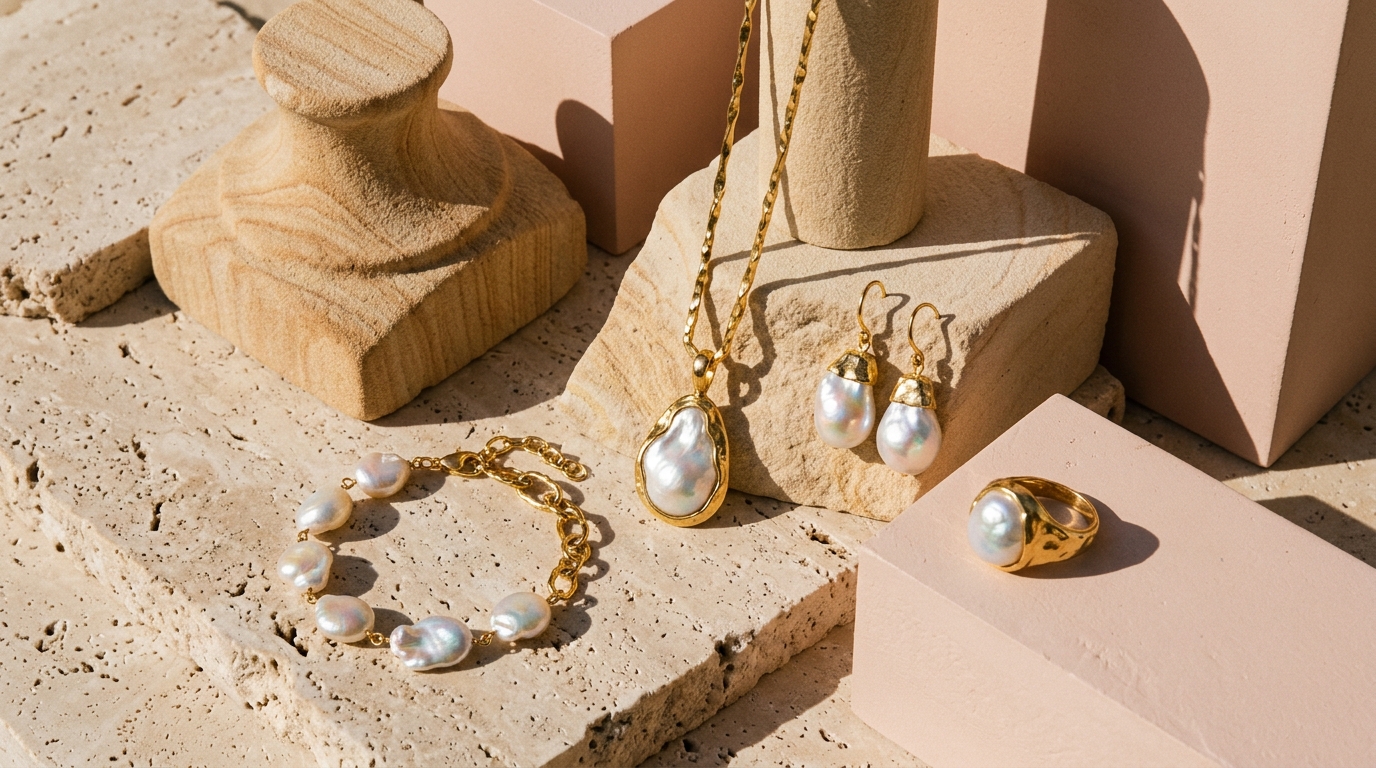
The primary difference between Biwa, Edison, and Keshi pearls lies in their nucleation method, nacre composition, and anatomical silhouette. While Edison pearls are single-bead nucleated inside large freshwater mussels to produce bold, 11–16mm sculptural spheres with intense mirror-metallic luster, Biwa pearls are mantle-tissue nucleated into slender, linear 15–25mm stick-like bars, and Keshi pearls are accidental non-nucleated gems formed from 100% solid pure nacre with unmatched iridescent orient.
1. Side-by-Side Comparison Table: Biwa vs. Edison vs. Keshi
Understanding the cultivation and gemological structure of each variety helps collectors evaluate quality, value, and everyday wearability. Below is an authoritative breakdown verified by our Montréal jewelry bench alongside International Gem Society data:
| Gemological Feature | Edison Baroque Pearl | Biwa (Stick) Pearl | Keshi Baroque Pearl |
|---|---|---|---|
| Nucleation Method | Single round bead nucleus implanted into mussel mantle | Mantle tissue insert (no rigid bead nucleus) | Non-nucleated accidental byproduct (rejected bead) |
| Internal Composition | Thick outer nacre layer (0.8–2.0mm+) surrounding bead core | Solid nacre layers forming along organic tissue strip | 100% solid pure nacre from core to outer surface |
| Average Size (mm) | 11 mm – 16 mm+ (bold focal scale) | 4–6 mm width × 15–25 mm length (slender stick) | 6 mm – 12 mm (petal-thin, freeform flake) |
| Luster & Optical Type | Intense mirror-metallic luster with deep rose & gold hues | Soft organic crystalline luster with smooth linear reflection | Exceptional rainbow orient (multidirectional iridescence) |
| Signature Silhouettes | Near-round, flameball drop, sculptural baroque egg | Elongated twig, flat bar, rice stick, undulating splinter | Petal flake, crushed silk disc, abstract organic pebble |
| Best Jewelry Setting | Solo pendant anchor, architectural cocktail rings | Gold-dipped slider bracelets, chokers, long danglers | Lightweight ear drops, delicate thin stacking rings |
| iBijoux Price Range (CAD) | $36.95 – $47.99 CAD | $39.65 – $41.99 CAD | $36.65 – $48.99 CAD |
| Signature iBijoux Piece | Freshwater Edison Pearl Necklace ($36.95) | Gold Dipped Biwa Slider Bracelet ($39.65) | Keshi Pearl Dangle Earrings ($39.65) |
2. Edison Pearls: Saltwater Scale & Mirror-Metallic Luster
Edison pearls represent the most significant innovation in freshwater pearl culturing of the last fifty years. Historically, freshwater mussels (such as Hyriopsis cumingii) produced 20 to 30 small, tissue-nucleated rice pearls simultaneously. By contrast, Edison pearl cultivation implants a single large mother-of-pearl bead into the body of the mussel, dedicating the entire biological energy of the mollusk to one exceptional gem over 3 to 5 years.
This technique produces remarkable 11–16mm dimensions that rival Australian South Sea or Tahitian pearls, but with a unique metallic sheen that traditional saltwater gems rarely display. In our Definitive Guide to Baroque Pearls, we note that Edison pearls often develop a distinctive “flameball” tail—an organic ripple of solid nacre trailing behind the nucleated sphere. In our atelier, creations such as the Freshwater Edison Pearl Ring Necklace ($47.99 CAD) and Baroque Pearl Pendant Necklace ($39.65 CAD) serve as collarbone statement anchors.
3. Biwa Pearls: Linear Architecture & Organic Stick Silhouettes
Biwa pearls take their name from Lake Biwa, the historic freshwater lake northeast of Kyoto, Japan, where modern freshwater pearl farming first gained global fame in the 1930s. While ecological changes drastically reduced commercial harvests in Lake Biwa itself, the trade name “Biwa pearl” is universally recognized by gemologists today to describe elongated, stick-like freshwater pearls cultured without a round bead nucleus.
Because Biwa pearls grow along slender strips of mantle tissue, they form organic rods, twigs, and flat blades ranging from 15mm to 25mm in length. Their linear architecture creates a striking contrast when worn on wrists or ears. At the iBijoux bench, our goldsmiths dip the organic tips of Biwa pearls into molten 14k gold, as showcased in the Baroque Biwa Pearl Bracelet ($39.65 CAD), the Baroque Biwa Pearl Choker ($39.65 CAD), and the Freshwater Biwa Pearl Danglers ($41.99 CAD).
4. Keshi Pearls: 100% Solid Nacre & Petal-Thin Iridescence
Derived from the Japanese word for “poppy seed,” Keshi pearls are accidental treasures of the culturing process. When a pearl oyster or freshwater mussel rejects or expels an implanted nucleus, the mollusk continues to secrete nacre into the empty sac. As a result, Keshi pearls contain no bead nucleus whatsoever—they are 100% solid, pure crystalline nacre from heart to surface.
Because there is no rigid spherical template guiding their growth, Keshi pearls form into paper-thin, petal-like flakes, crushed-silk pillows, and abstract freeform silhouettes. More importantly, because the entire gem consists of uninterrupted aragonite layers, light penetrates through the crystal without reflecting off an interior shell bead, generating intense, prismatic *orient* (rainbow shimmer). Explore this phenomenon in our Rainbow Baroque Pearl Thin Ring ($36.65 CAD) and Authentic Baroque Pearl Ring ($48.99 CAD).
5. Atelier Buyer Guide: Which Pearl Silhouette Fits Your Style?
To help you select the ideal piece from our Montréal atelier, consider how each pearl variety complements your existing jewelry wardrobe and lifestyle:
- Choose Edison Pearls if: You love bold, modern focal jewelry with serious presence (11–15mm) and a metallic, mirror-like gleam that stands out against cashmere sweaters, evening tailoring, or open collars. Pair with our baroque pearl necklaces collection.
- Choose Biwa Pearls if: You gravitate toward architectural minimalism, geometric lines, and textural wrist layering. Biwa stick pearls sit flat against the skin and make exceptional everyday bracelets from our baroque bracelets collection.
- Choose Keshi Pearls if: You appreciate artistic, featherlight fine jewelry with ethereal rainbow color play. Keshi pearls make comfortable, all-day earrings in our earrings collection and adjustable bands in our rings collection.
6. Frequently Asked Questions (FAQ)
Which is more valuable: Edison, Biwa, or Keshi pearls?
Value depends on millimeter size, luster intensity, and nacre quality rather than type alone. Large Edison pearls (13–16mm) with mirror luster command premium prices due to the multi-year investment required to culture a single gem per mussel, while 100% solid-nacre Keshi pearls with exceptional orient are prized by collectors for their rare accidental formation.
Are Keshi pearls all natural pearls?
Yes and no. Keshi pearls form inside cultured pearl farms, but they grow spontaneously without a nucleus when the mollusk rejects an implanted bead, meaning their nacre deposition occurs 100% naturally without human nucleation guidance. Gemologists classify them as non-nucleated cultured pearls of solid nacre.
Do Biwa pearls come only from Lake Biwa in Japan?
No, original historical Biwa pearls originated in Japan’s Lake Biwa, but commercial farming there ceased due to industrial water pollution decades ago. Today, the term “Biwa pearl” is the standard gemological trade name for elongated stick-shaped freshwater pearls cultured using the same mantle-tissue techniques.
Why are Edison pearls so much larger than traditional freshwater pearls?
Edison pearls are larger because farmers cultivate only one pearl per large freshwater mussel rather than 20 to 30 pearls in a single shell. The mussel focuses all its nutrients on coating a single implant over 3 to 5 years, producing sizes between 11mm and 16mm+.
How should I care for Keshi and Biwa pearls?
Because both Keshi and Biwa pearls consist of solid calcium carbonate nacre (ranking 2.5 to 4.5 on the Mohs hardness scale), wipe them with a damp microfiber cloth after wearing to remove skin oils, store them flat in a soft velvet pouch, and keep them away from perfumes, hairspray, and ultrasonic cleaners. For full instructions, consult our Handcrafted Pearl Jewelry Care Guide.
What are iBijoux shipping and return terms for pearl jewelry in Canada and the US?
iBijoux offers complimentary tracked shipping across Canada and the US on orders of $150 CAD or more ($12 CAD flat rate in Canada / $15 CAD to the US under $150 CAD), with orders dispatched within 1–3 business days from our Montréal atelier and backed by a 30-day return policy on unworn pieces. View complete details on our Shipping & Returns page.
Scope & Editorial Disclosure: This gemological guide examines cultured freshwater Edison, Biwa stick, and Keshi baroque pearls handcrafted at the iBijoux Montréal atelier. Millimeter measurements, CAD price ranges ($26.65–$56.65 CAD single items; $398.65 CAD artisan sets), and store policies were verified live on October 20, 2026. External gemological criteria follow published benchmarks from the International Gem Society.