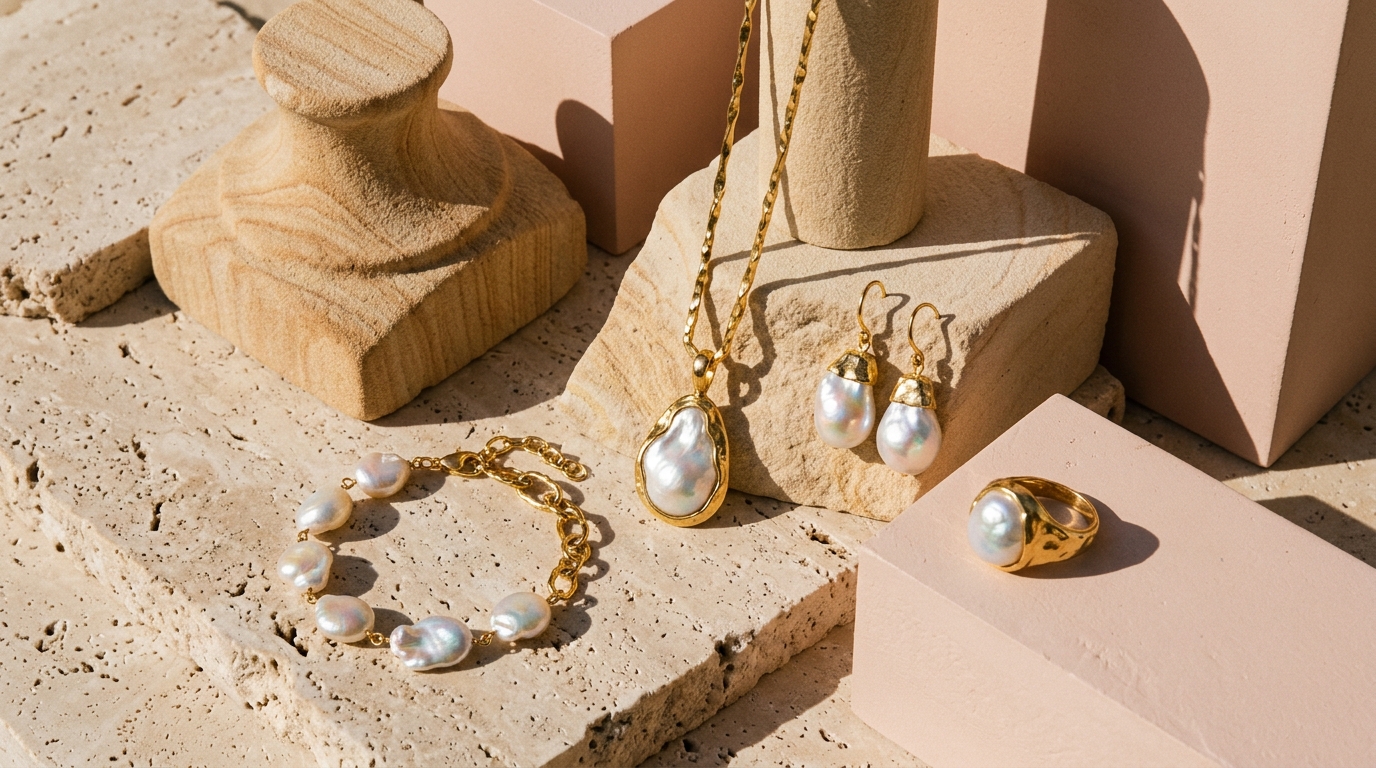
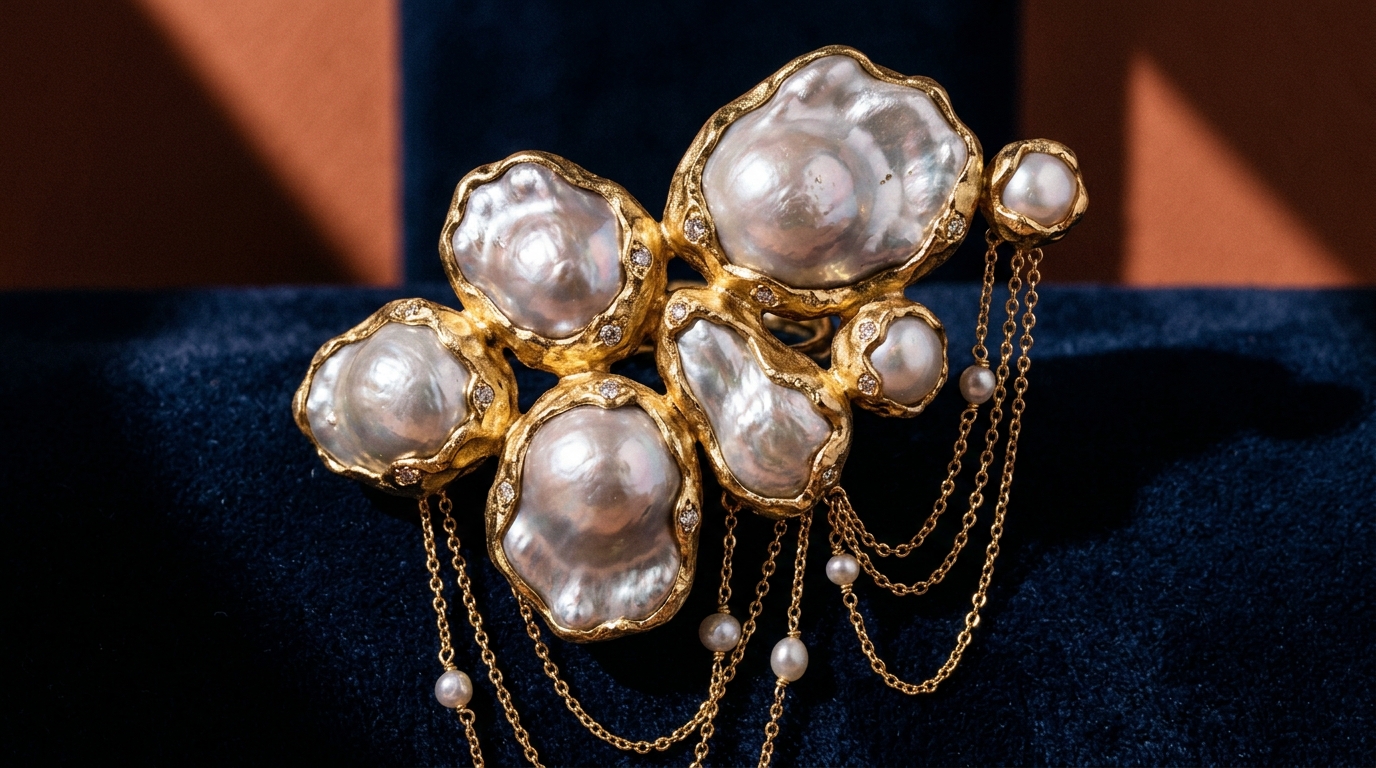
In an era dominated by high-speed mechanized manufacturing and calibrated uniform spheres, true luxury is no longer found in identical repetition. Instead, the modern jewelry connoisseur seeks the irreplaceable—pieces that tell an intimate geological and oceanic story that cannot ever be cloned.
The Rebellion Against Spherical Uniformity
The word baroque finds its etymological origin in the Portuguese barroco, historically used by pearl divers and Renaissance merchants to describe an irregular, elaborately contoured pearl. Where classical 20th-century jewelry conventions favored rigid, millimeter-matched white spheres, contemporary collectors recognize that symmetry often sacrifices soul.
Unlike spherical pearls which are nucleated with round mother-of-pearl beads to force a uniform spherical growth, freshwater baroque and Keshi pearls develop in organic dialogue with the living oyster. As mineral-rich nacre layers accumulate over three to five years, the mollusk creates rhythmic undulations, sculptural plateaus, and molten contours that mirror the movement of cold water.
“No two baroque pearls on Earth share the same footprint of light. When you wear one, you are wearing an oceanic sculpture that exists only once in the universe.”
Understanding Orient: The Science of Living Light
What gives a fine baroque pearl its mesmerizing iridescence? In gemological terms, this optical phenomenon is known as orient. Because the surface of a baroque pearl is rippled and undulating rather than flat, microscopic aragonite calcium carbonate crystals reflect and refract ambient light from multiple planes simultaneously.
As you move through natural sunlight or candlelit evening rooms, the pearl breaks light into subtle prismatic overtones—hints of champagne gold, peacock rose, icy lavender, and silver. A round pearl reflects a single specular highlight; an organic baroque pearl illuminates with multidirectional life.
The iBijoux Curation Standard
At our Montréal studio, fewer than 3% of harvested freshwater baroque pearls meet the aesthetic and structural criteria required for an iBijoux creation. We look for:
- Nacre Depth & Luster: A thick, mirror-reflective crystalline structure that exhibits deep internal glow rather than chalky surface opacity.
- Sculptural Silhouette: Architectural balance—forms that nestle naturally against the collarbone or float gracefully from earlobes without tilting awkwardly.
- Natural Coloration: 100% untreated natural luster, free from synthetic bleaches or dye treatments.
To experience these organic forms in person, explore our permanent collection of Baroque Pearl Necklaces and The Baroque Pearl Anatomy Guide and our flagship gemological masterclass, The Definitive Guide to Baroque Pearls: Types, Grading, Styling & Care.